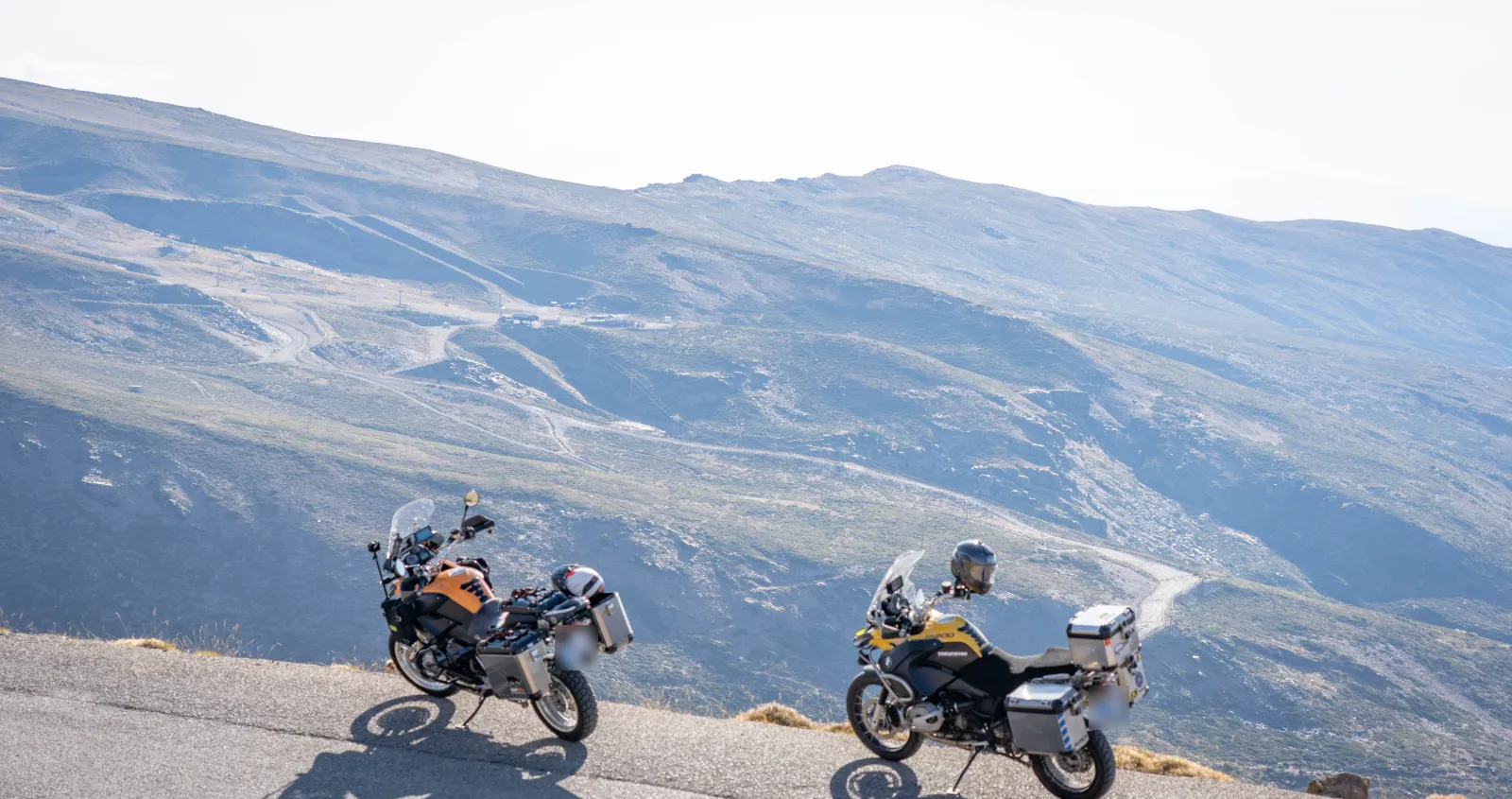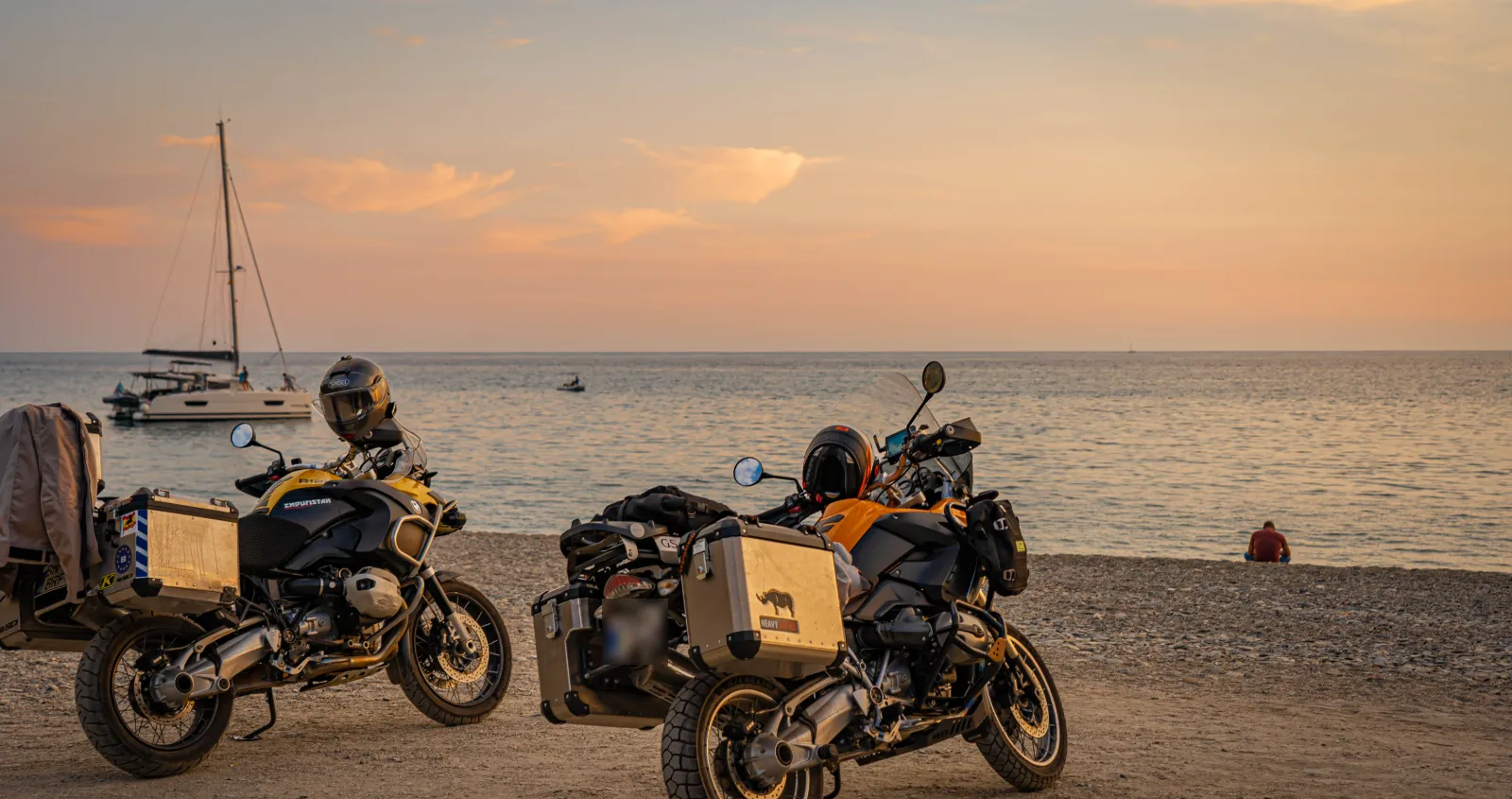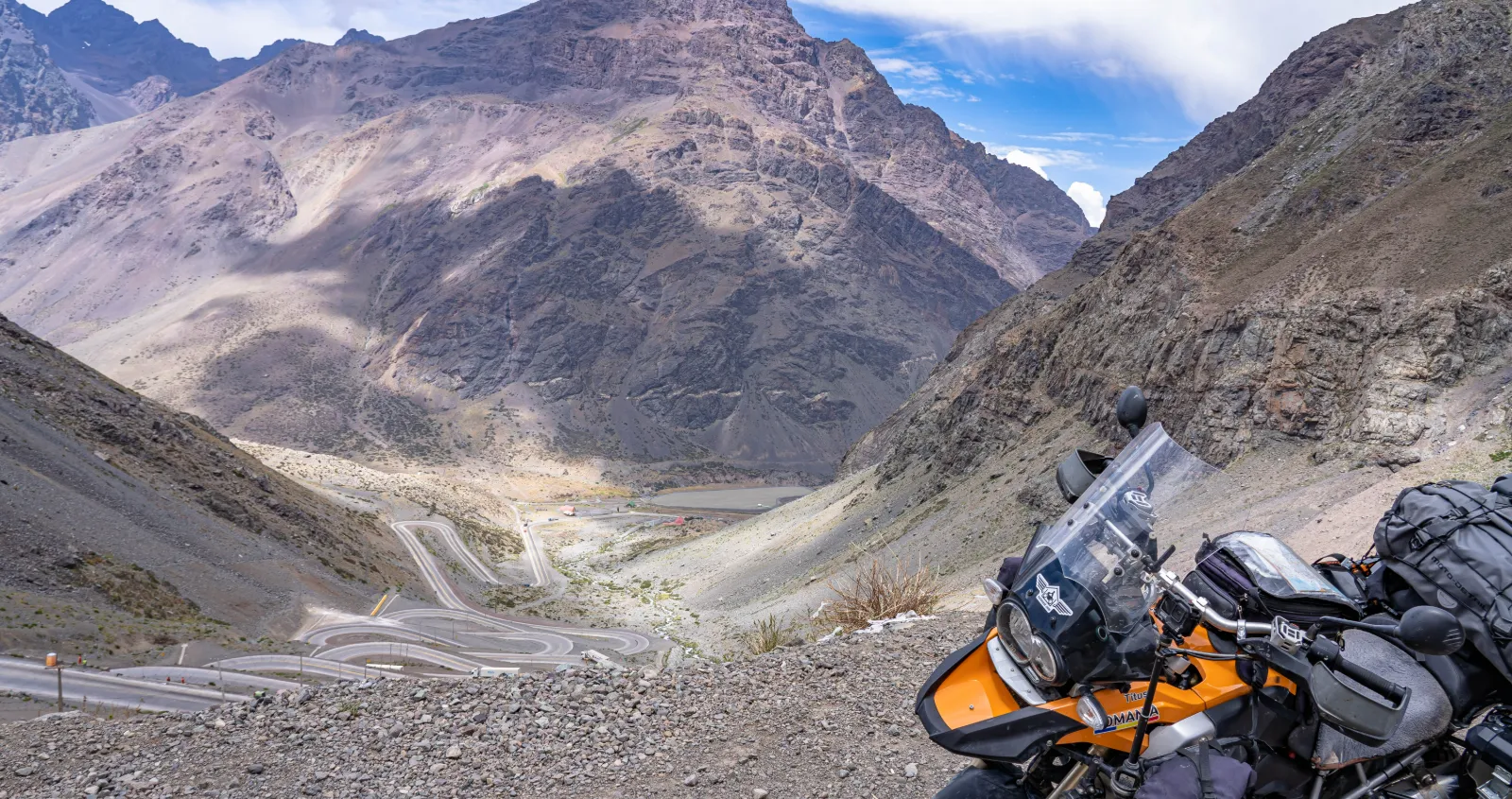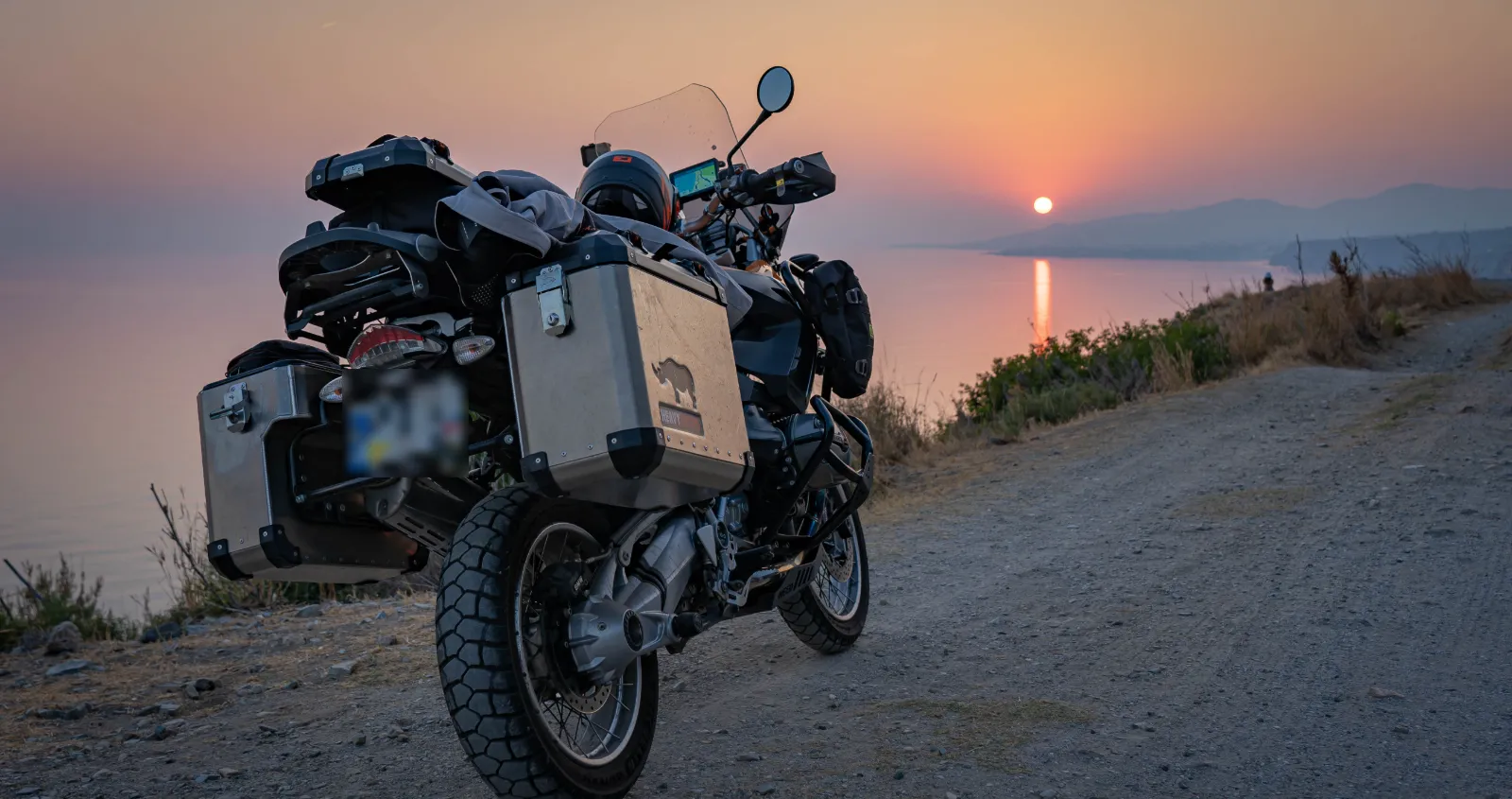
Two trips can have the same route, the same length and the same bike, and one of them will be the story you tell all winter while the other is a race you barely finished. The difference is rarely the road.
Pace, not distance
Three hundred kilometres of tight hairpins cost more than five hundred on open road. Tiredness is not measured in kilometres but in decisions per minute: every blind corner, every lorry overtaken, every unfamiliar junction.
The sign that the pace is too high is not a sore back. It is the moment you ride past a viewpoint and do not stop, because "we still have a long way to go".
The evenings make the trip, not the days
You ride during the day. In the evening you recover — or you do not. A good evening means a place where the bike is under cover, where you can dry your gear if it rained, and where you do not have to get back on the bike to eat.
That is why a rider chooses a room differently from a tourist with a car. Three questions change the whole evening: where does the bike spend the night, can I walk to food, and is there somewhere to leave wet gear.
What is actually hard
- Weather that lasts two days, not an hour of rain.
- Link days, the ones that take you from one fine place to the next along a dull road. Shorten them, or break them with a stop.
- A group riding at different speeds. That is settled over breakfast, not in traffic.
- The unknown at seven in the evening: you still do not know where you are sleeping and it is getting dark.
Three things that change a lot for little effort
- A planned stop every two hours, even when you are not tired. It costs less time than one mistake made tired.
- The first hour of the morning on the best road of the day, not on the motorway. You are fresh and the road is empty.
- Beds chosen a day ahead, not four hours ahead. Not necessarily booked — just known.
People stay with you longest. The mechanic who opened on a Sunday, the host who moved a car out of the garage to make room, two riders met at a petrol station who told you to take the other pass. None of that shows up on an ordinary map.
On the Motonest one it does, because riders put it there. If you had a good evening somewhere, write it down: for someone searching at seven in the evening, in the rain, that is exactly the piece that is missing.
Where to next
Know a good place? Put it on the map.
The map is made of the places riders put on it. It takes a minute.