Three things nobody plans at home and that eat your time on the road: where you get money, where you find out what is happening in the area, and where you pull over when you want to stop.
Money
- Take cash from bank machines, inside or in front of a bank, not from the independent ones in tourist areas.
- Refuse the conversion offered by the machine or the card terminal ("would you like to pay in your own currency?"). The rate they pick is almost always worse than your bank's.
- Avoid exchange offices in stations, airports and border posts. A big rate on the board and a small commission in the small print is a classic combination.
- Carry cash for two days, plus a small reserve hidden separately. In many mountain areas, a card is not an option.
- Two cards, from different banks, kept in different places. A card blocked halfway through the trip stops being a problem if you have the second one.
- Tell your bank where you are going, if your bank asks for that, and check the daily limits before you leave.
At borders outside the Schengen area, change only what you need for the first few hours. The rate at the border is the worst rate you will see in that country.
Information
Who gives you a good answer depends on what you are asking:
- About the road, the passes and what has closed: mechanics in a local workshop and the people at petrol stations along the route. They see every day what gets through and what does not.
- About where to sleep: the host you are already staying with. Guesthouses know each other and will send you to one that takes riders.
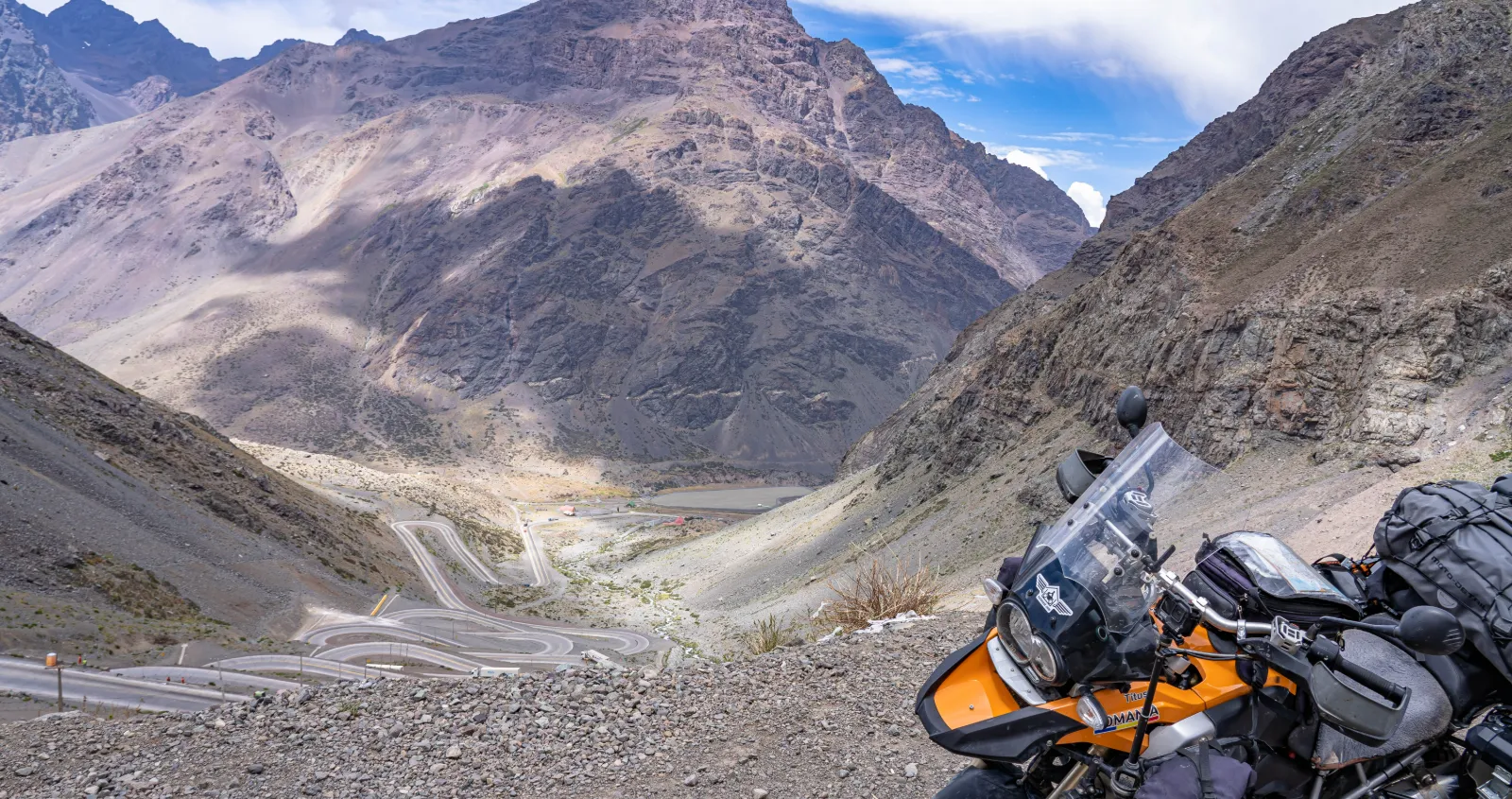
- About mountain weather: the people who work up there — huts, refuges, stations. The forecast on your phone does not know what the wind does in that pass.
- About rules, fines and papers: a local motorcycle club or a riders' group from that country.
- About fair prices: ask two people, not one.
A question asked well gets a good answer. Not "is the road to X nice?", but "if I leave here at nine in the morning on a motorcycle, do I reach X by five?".
Stops
- Every two hours, even if you do not feel the need. Concentration drops before tiredness shows.
- Choose places that have a reason to exist: petrol stations, proper lay-bys, cafés on the main road. Not the edge of an empty road.
- Park with the bike in your line of sight while you sit down. And keep your helmet with you, not on the mirror.
- At lunch, a long stop: an hour, not twenty minutes. The last part of the day is ridden differently.
- Last fuel stop an hour before sunset. Small petrol stations on secondary roads close early.
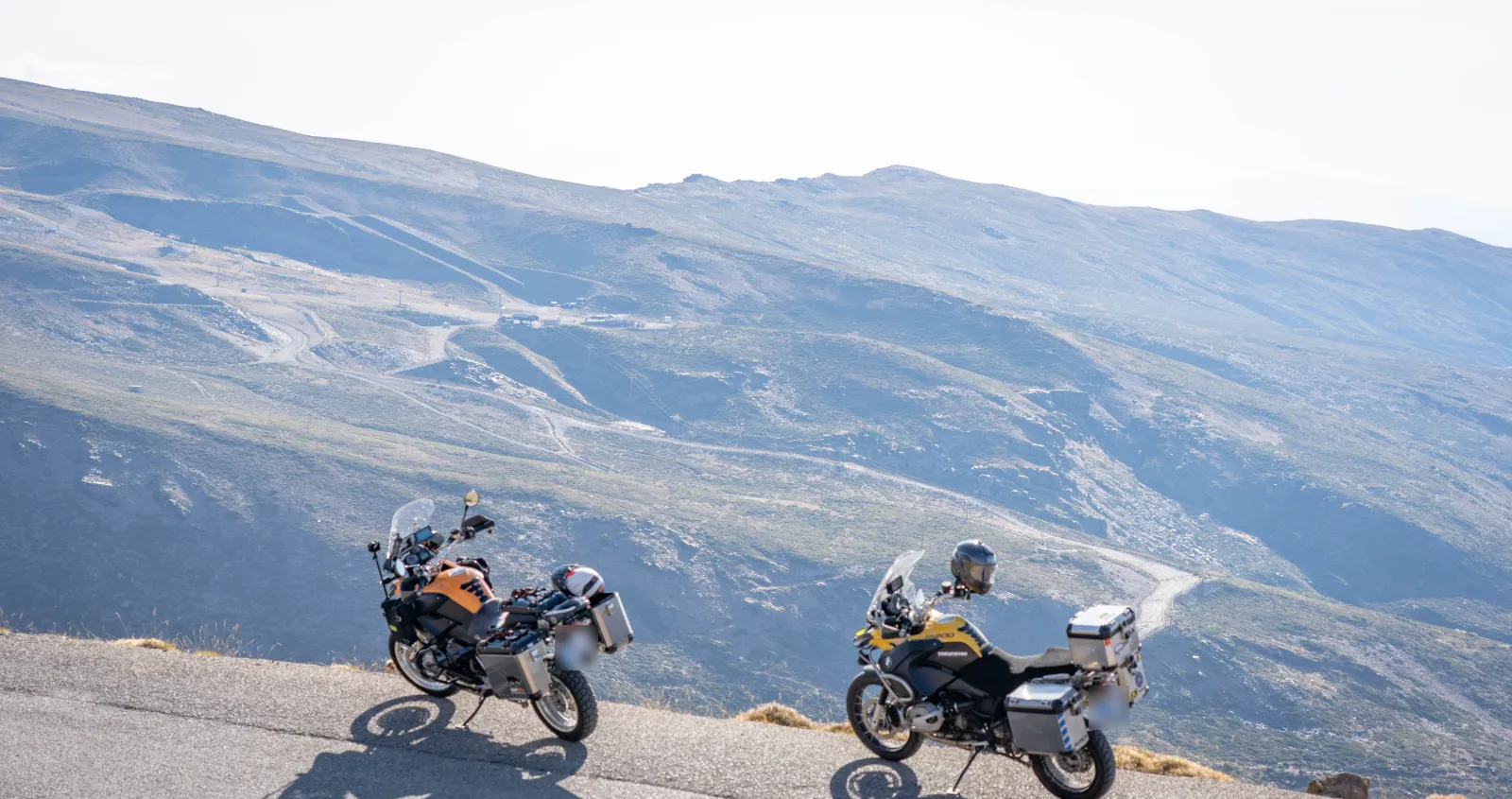
Lay-bys, viewpoints and places to pull over are a category of their own on the map precisely because a rider looks for them differently from a tourist with a car: shade, somewhere sheltered to park, close to the road, no ten-kilometre detour.
If you come across a good place to stop, an honest cash machine or a workshop that told you the truth about the pass, put it on the map. That information is worth exactly one week — to whoever comes next week.
Where to next
Know a good place? Put it on the map.
The map is made of the places riders put on it. It takes a minute.